
Hands-On Bike Assembly Team Building in Bangkok
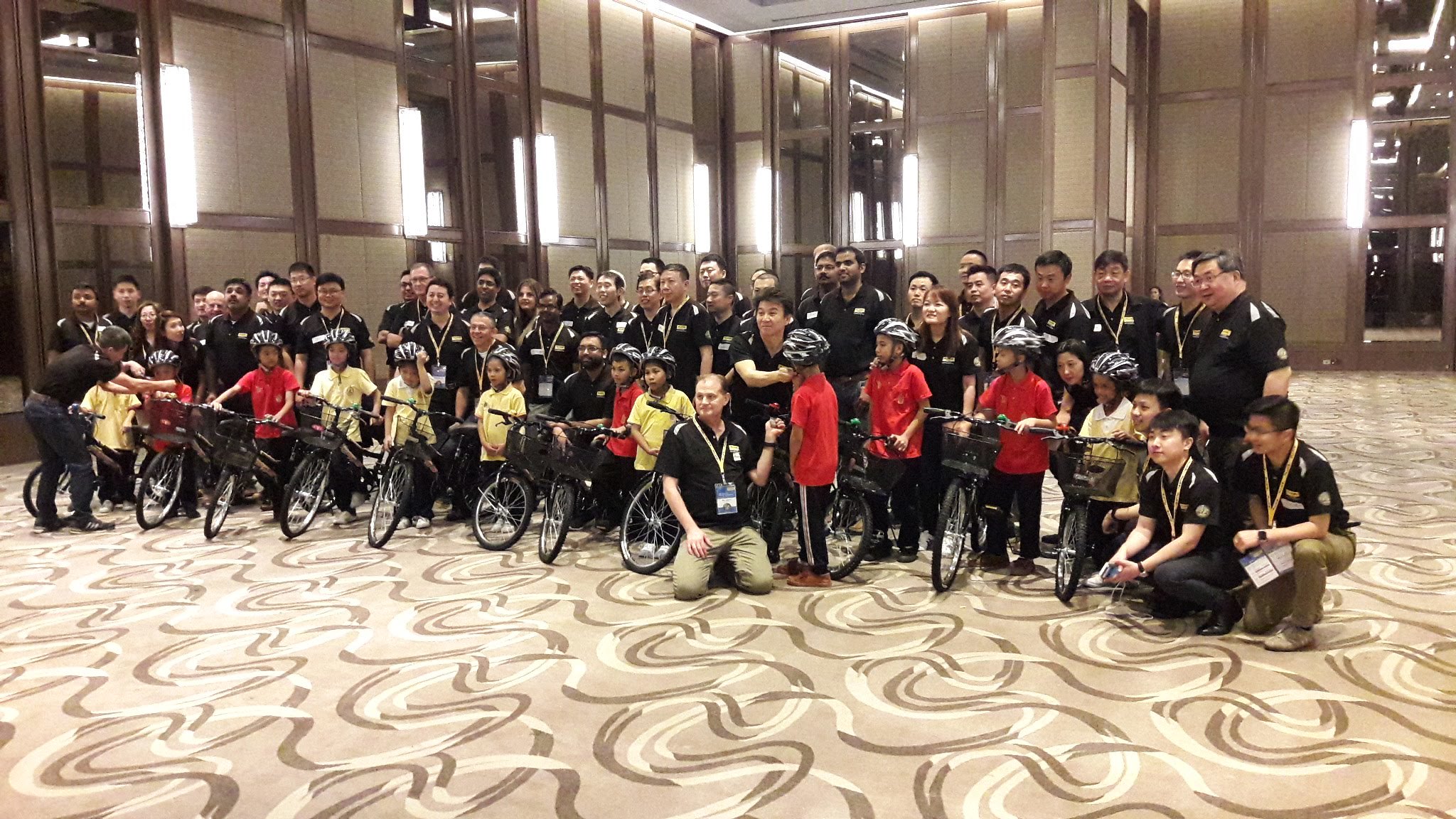
Bike assembly team building in Bangkok transforms a practical construction task into an engaging corporate challenge built around communication, planning, coordination, problem solving, and shared responsibility. Instead of competing through conventional games, participants work in small teams to turn a collection of bicycle components, tools, instructions, and limited resources into a correctly assembled final product. The challenge appears straightforward at first, but successful completion quickly requires teams to organize themselves, understand the task, divide responsibilities, manage tools, check details, solve unexpected problems, and coordinate the final assembly process under time pressure. MakingTeams designs the experience so that the bicycle becomes more than the final objective: it becomes a visible representation of how effectively the group plans and works together. Participants must decide who will interpret instructions, who will organize parts, who will handle particular assembly stages, who will monitor quality, and how the team will respond when something does not fit or an earlier decision needs to be corrected. These interactions make the format particularly useful for cross-functional teams because the activity rewards practical cooperation rather than job title, seniority, or specialist knowledge. A colleague who rarely leads formal meetings may become highly effective at troubleshooting, while another participant may naturally coordinate workflow or identify quality issues before they become larger problems. Bangkok hotels, conference venues, ballrooms, and indoor event spaces provide a convenient environment for the challenge, allowing it to be integrated into conferences, leadership meetings, employee engagement programs, regional gatherings, and corporate offsites without requiring complex outdoor logistics. The experience can be delivered for smaller management groups or scaled into multiple parallel teams for larger organizations. By the end of the program, participants have created something tangible together while experiencing many of the same dynamics that influence project performance at work: planning before execution, clear communication, efficient role allocation, mutual accountability, adaptability, and attention to quality.
Why Bike Assembly Develops Collaborative Problem Solving
A bike assembly challenge is particularly effective for corporate teams because it creates a practical problem with a clear objective but multiple possible approaches to execution. Teams understand what success looks like, yet they still need to determine how to get there efficiently, which makes planning and collaboration immediately relevant. Participants receive components, tools, and guidance, but simply having the necessary resources does not guarantee success. The group must establish priorities, organize the workspace, understand dependencies between different assembly stages, allocate tasks according to individual strengths, and maintain awareness of what other team members are doing. If everyone begins working independently without coordinating, duplicated effort, missing components, incorrect assembly, and delays can quickly appear. If the group spends too long discussing every detail, it may lose valuable execution time. MakingTeams uses this tension between planning and action to create a realistic learning environment where teams can observe their own decision-making habits. The activity also gives participants immediate feedback because the quality of collaboration becomes visible in the progress of the bicycle itself. A well-organized team usually develops a clear workflow and adapts quickly when issues arise, while a fragmented team may repeatedly stop to correct earlier decisions. These patterns create natural opportunities for reflection on how teams manage projects, responsibilities, information, and quality in the workplace. Because the challenge is practical rather than theoretical, participants experience these lessons directly rather than discussing them in abstract terms.
Planning Before Execution Improves Team Performance
One of the strongest lessons in a Bangkok bike building challenge is the importance of understanding the whole task before rushing into individual actions. Teams that immediately begin assembling components without first reviewing the instructions, identifying parts, and understanding dependencies may discover later that an early decision makes another stage more difficult. MakingTeams can structure the activity so teams are encouraged to spend an initial planning period examining the bicycle, tools, instructions, and available resources before construction begins. Participants need to agree on an overall approach, determine which tasks can happen simultaneously, identify which stages depend on earlier work, and decide where quality checks should occur. This mirrors real business projects where teams often face pressure to start producing results before everyone fully understands scope, responsibilities, or dependencies. Participants can see that effective planning does not mean delaying action indefinitely; it means creating enough shared understanding to make execution faster and more reliable. As the challenge progresses, teams may need to revise their initial plan when unexpected problems appear, reinforcing the value of flexible planning rather than rigid adherence to the first idea. The exercise therefore creates a useful balance between preparation, execution, and adaptation. When the final bicycle comes together efficiently, participants can directly connect that outcome with the quality of the planning decisions they made at the beginning.
Role Coordination Reveals Different Team Strengths
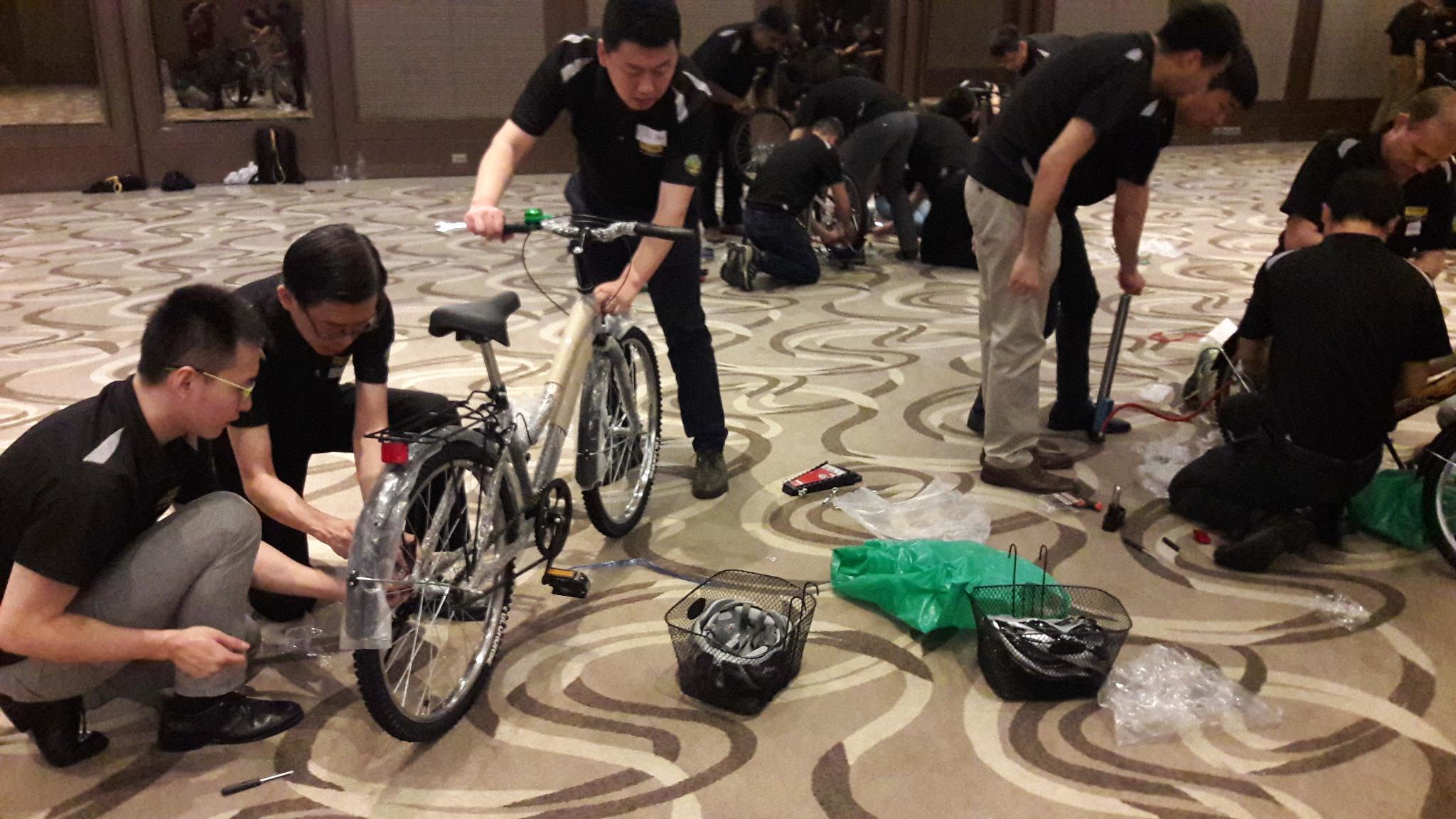
Bicycle assembly naturally creates multiple responsibilities, making it an effective way to reveal strengths that may not always be visible in normal workplace settings. Some participants may be comfortable using tools and working directly with components, while others are better at interpreting instructions, organizing materials, monitoring progress, identifying mistakes, or coordinating communication between different parts of the team. MakingTeams encourages teams to distribute responsibilities rather than allowing one technically confident participant to complete the entire task. This creates opportunities for people with different working styles to contribute to the final outcome. Roles may also change throughout the challenge as new requirements emerge, demonstrating that effective teams often need flexible leadership rather than one person controlling every stage. A participant who initially organizes the workflow may later become responsible for quality control, while another colleague may take the lead when the team encounters a mechanical or sequencing problem. These transitions encourage teams to recognize expertise based on the immediate task rather than organizational hierarchy. For cross-functional and multinational groups, this can be especially valuable because colleagues begin to see one another beyond their formal roles. The challenge creates a practical demonstration that strong performance depends on combining different capabilities rather than expecting everyone to contribute in the same way.
Troubleshooting Builds Adaptability Under Pressure
Even with clear instructions, assembly challenges rarely progress perfectly from beginning to end, and these unexpected moments create some of the most useful team learning opportunities. A component may be installed incorrectly, a sequence may need to be reconsidered, or the team may discover that something overlooked earlier now affects the next stage. Instead of treating these moments as failures, MakingTeams uses them as opportunities for teams to practice calm problem solving and adaptation. Participants need to diagnose what happened, exchange observations, identify possible solutions, and decide whether to correct the issue immediately or modify another part of the plan. Time pressure can make these decisions more difficult because teams may become tempted to blame individuals or continue with an imperfect solution simply to finish faster. A well-facilitated challenge encourages groups to remain focused on the problem rather than the person who made the mistake. This creates a useful parallel with professional environments where projects regularly encounter incomplete information, changing conditions, and unexpected obstacles. Teams that can pause, reassess, and adjust without losing momentum generally perform more reliably than teams that become frustrated by disruption. The bike assembly challenge makes adaptability visible and measurable because the consequences of each decision can be seen directly in the final product.

From Bicycle Components to a Shared Team Achievement
The strength of hands-on team building Bangkok experiences lies in the fact that participants create something real rather than simply completing an abstract exercise. Throughout the bike assembly challenge, separate components gradually become a recognizable and functional bicycle, giving teams a clear sense of progress and collective ownership. This visible transformation helps maintain motivation because participants can see the result of each decision and contribution. MakingTeams can structure the program around a sequence of milestones, such as component identification, frame preparation, wheel installation, controls, accessories, quality checks, and final presentation, depending on the bicycles and event format being used. Teams may work within a common overall time limit or complete additional mini-challenges that allow them to earn tools, information, or resources before progressing to another stage. The format can remain primarily collaborative or include a controlled competitive element based on assembly quality, teamwork, presentation, and completion time. Importantly, speed should not become the only success metric because a bicycle that is assembled quickly but incorrectly does not represent effective teamwork. The strongest programs therefore emphasize quality, safety, communication, and shared responsibility alongside efficiency. When teams complete the bicycle and present their work, the moment creates a natural sense of achievement because the outcome is physical, visible, and connected directly to their collective effort. This makes the activity memorable while reinforcing the idea that successful execution depends on many interconnected contributions rather than one individual performance.
Quality Control Encourages Shared Accountability
A bicycle assembly challenge provides a powerful way to demonstrate that completing a task is not the same as completing it correctly. MakingTeams can include a structured quality inspection before any bicycle is considered finished, requiring teams to check components, alignment, controls, fastenings, accessories, and other relevant details according to the event setup. This changes the team mindset from simply reaching the end of the task to taking collective responsibility for the standard of the final result. Participants learn that quality cannot be left entirely to one person at the end because mistakes often need to be prevented throughout the process. Teams may introduce their own checkpoints, pair participants to review one another’s work, or maintain a simple checklist as assembly progresses. These behaviors closely reflect strong operational practices in business, where quality depends on processes, communication, and accountability rather than last-minute inspection alone. When an issue is discovered, the team must decide how to correct it efficiently without creating additional problems. The experience also demonstrates how psychological safety can influence quality, because participants need to feel comfortable pointing out potential mistakes even when another colleague completed the work. Shared accountability therefore becomes a practical behavior rather than a management concept.
Limited Resources Encourage Efficient Communication
Tools, workspace, time, and information can all be intentionally limited within the challenge to create realistic resource constraints. Teams may need to share tools, coordinate access to certain materials, or decide which assembly stages deserve attention first. MakingTeams uses these constraints carefully so they create collaboration rather than unnecessary frustration. Participants quickly discover that asking for information clearly, communicating tool availability, and coordinating parallel tasks can save significant time. If several people need the same resource but do not communicate, the workflow slows down and frustration increases. Teams therefore begin developing informal systems for requesting equipment, reporting progress, and signaling when another participant can begin the next stage. This reflects workplace environments where teams rarely have unlimited budgets, specialist capacity, or time. The activity demonstrates that resource scarcity does not automatically reduce performance when communication and prioritization are strong. In many cases, constraints can actually improve collaboration because they force people to understand how their work connects with the wider process.
Completing the Bicycle Creates a Strong Shared Success Moment
When participants step back and see a complete bicycle where previously there were only separate components, the sense of collective accomplishment is immediate. The final result is particularly powerful because every participant can identify some part of the process in which they contributed, whether through physical assembly, organization, problem solving, coordination, or quality control. MakingTeams can use this moment for team presentations, photographs, recognition, or a short facilitated discussion about what enabled each group to succeed. Teams may explain their working strategy, the biggest obstacle they faced, what they changed during the process, and which behaviors helped them complete the task. These reflections allow participants to recognize that the bicycle represents more than mechanical assembly; it represents a chain of interdependent decisions and contributions. In some event formats, completed bicycles may also become part of a separate community initiative or donation program, although this can be integrated only when it matches the client’s broader objectives. The core team building experience remains valuable even without a CSR component because the achievement itself provides a strong emotional and practical conclusion. Shared success helps reinforce team identity and creates a memorable reference point that colleagues can return to after the event.
Facilitation, Team Dynamics, and Corporate Learning Outcomes
A professionally designed bike assembly team building program should connect the practical challenge with the organization’s wider objectives rather than relying only on the novelty of assembling bicycles. MakingTeams begins by understanding the participant profile, event context, group size, available time, venue, and desired outcomes before determining how teams should be structured and how much facilitation should be included. A leadership group may benefit from deeper observation of decision-making and role allocation, while a larger employee engagement program may place more emphasis on energy, cooperation, and shared achievement. Cross-functional teams can be deliberately mixed so participants collaborate with colleagues they do not normally work with, while regional groups can be structured to connect employees from different countries or business units. Facilitators monitor how teams plan, communicate, distribute responsibility, respond to errors, and manage pressure without unnecessarily interfering with the task. The experience can then be debriefed around behaviors that participants actually demonstrated rather than generic teamwork theory. This keeps the reflection credible because participants have a concrete example of how their group behaved when facing a real practical challenge. The program can also be integrated into conferences, management meetings, leadership development events, regional offsites, or broader Bangkok destination programs. By connecting activity design with workplace relevance, MakingTeams turns a hands-on assembly experience into a practical learning environment for collaboration, accountability, communication, and execution.
Professional Facilitation Connects Assembly with Workplace Behavior
Facilitation helps teams recognize patterns that might otherwise disappear once the activity ends. MakingTeams facilitators can observe whether teams planned before acting, whether responsibilities were clear, how information moved through the group, how participants responded to mistakes, and whether all members had meaningful opportunities to contribute. During the debrief, participants can compare their experience with familiar workplace situations such as project launches, operational deadlines, cross-functional initiatives, product development, or organizational change. A team that lost time because several people worked on the same task may recognize a broader issue around unclear ownership. Another group may discover that progress accelerated once members began communicating dependencies more openly. Facilitators can also highlight examples of adaptive leadership, where responsibility shifted naturally toward the person with the most relevant capability. These observations help participants move from simply remembering the activity as enjoyable to understanding what it revealed about how they work together. The depth of facilitation can be adjusted according to the company’s objectives, ranging from a short energetic reflection to a more structured team development discussion.
Customization Makes the Challenge Relevant to Different Corporate Groups
The bike assembly format can be customized considerably without losing the clarity of the central objective. MakingTeams can adjust team size, timing, scoring, competition level, facilitation depth, additional challenges, branding, and final presentations according to the needs of the client. Leadership groups may receive fewer instructions and more complex decision-making constraints, while larger employee events can use structured assembly stages that allow many teams to work simultaneously. Corporate values or strategic themes can be incorporated into briefing questions, milestone challenges, or the final debrief without forcing artificial messaging into the practical experience. The program can also be adapted for different levels of physical confidence because participants do not need to perform the same role throughout the assembly process. Venue setup can be designed around hotel ballrooms, conference spaces, or other indoor Bangkok event locations, making the activity practical throughout the year and relatively independent of weather. Where appropriate, MakingTeams can also coordinate logistics around bicycle delivery, tools, protective equipment, facilitators, workspace setup, quality inspection, photography, and removal or distribution of completed bicycles. This customization allows the challenge to function as a focused standalone workshop or as one component of a larger corporate program.